Content Warning Discourse is in the air again, which means people are showing their whole asses again, now with links to news outlets breathlessly and uncritically regurgitating anti-content-warning opinions because journalism is dead. I’ve already blown my stack about media literacy elsewhere at length, so I’ll drop the short, semi-polite version of that here, along with my stance on content warnings.
According to one such article: “In five of nine studies, a warning did not cause participants to avoid the material.” Someone who does not breathlessly and uncritically regurgitate everything they’re told should have asked:
So in 45% of the studies, avoidance was increased?
Did you not use eight or ten studies because the general public knows 50/50 is inconclusive and you needed a tie breaker that supported your opinion piece?
Did the participants in the five (un)cited studies even have the option to avoid the material? Because the three “warnings make things worse” studies I read preparatory to this interview forced participants to experience the material they were warned about, fundamentally misinterpreting the purpose of the warning, which is to allow people to make informed choices for themselves.
To which specific studies are you referring so I can pull them up while I have you here and go over the methodology with you before I run to press to not breathlessly and uncritically regurgitate your opinion piece?
Hey, I get it. I haven’t read any of the studies that allegedly prove people who swear are more emotionally honest and smarter than people who don’t because I, a person who swears, like the sound of it too much to scratch the high-gloss surface. The difference is, I know that research probably doesn’t reveal anything so simplistic (and if it does, the methodology sucked), and I don’t whip out links to specious puff pieces to justify being an asshole.
I’ve endured many rounds of this particular discourse. I’ve heard a thousand times that a brief statement acknowledging what you’ve written is censorship and that mentioning absolutely anything that occurs in a book ruins the whole thing for everyone.
Bullshit.
People in publishing are vehemently anti-content-warning for the simple reason that such warnings might cause someone to not give them money. And they’re right! If I know up front you wrote something I don’t want to read, I won’t give you my money!
Newsflash: Not everyone is your customer. Just like people might decline to give you money because they don’t like your genre, jacket copy, cover, objectionable web presence, or any number of other disqualifying factors, they can decline to give you money because they don’t want to be traumatized. Yet this particular “fuck your feelings” energy is directed exclusively at people who don’t want to be traumatized, as if some people feel entitled to inflict trauma on others and how dare you even suggest measures to deny them that privilege?
I don’t know how to explain to you why you should care about other people.
—Lauren Morrill
“I shouldn’t have to be inconvenienced. They can just email the author and ask, read a million reviews and hope one of them mentions the topics they want to avoid, check a trigger warning website and hope the book is popular enough to warrant an entry, and post their question in an online space and deal with all the abuse announcing a vulnerability on the internet invites.” This puts an undue burden of labor on the vulnerable person. Why? So people who don’t care about them don’t have to acknowledge their existence, much less feign interest in the well being of others.
“All right, fine, but put your stupid warnings in the back of the book so I don’t have to be annoyed by them.” Then vulnerable people are forced to go to brick-and-mortar stores to inspect the merchandise while everyone else is free to shop online because online previews show only the beginnings of books. Again, undue burden. Why? Because some people prioritize the tremendous hassle of flipping past one page labeled “warning” without reading it over possibly provoking another person’s PTSD.
Undue burdens and people who don’t need an accommodation vociferously complaining that it exists for people who do? Whew. If you hadn’t previously considered this an accessibility issue, can you see it now?
ETA June 3, 2024: Now they’ve added “But having my fun slightly diminished by spoilers is my disability!”, another tactic ripped from the pages of the I’m the Real Victim Here, Center Me playbook. Queries about how the poor dears shield themselves from information revealed by covers, jacket copy, advertising, and prior books in a series go unanswered. Apparently, the only reveals required to be a pleasant surprise are events like rape and child abuse!
ETA June 3, 2024: And the old “You can’t possibly foresee everything everyone wants to be warned about, and when perfection is impossible, one must do nothing.” Better to maintain the toxic status quo than to make imperfect incremental progress that requires sustained effort toward improvement, in the minds of this microcosm of the electorate that determines our fate on a global scale.
The thing that tipped me into full-blown dragon mode this morning was some charmer saying he’s “disgusted by the fanfic-ification” of writing spaces. I’m not involved in fanfic, but I’ll say this for them: they have a community. When they fill their sandboxes with dark shit, they completely surround that hazard with gates and signage so no one stumbles in unawares and gets hurt accidentally. How is that possibly a negative, unless you want to hurt people?
Thank your gods I’m not the boss of publishing. Content warnings would be mandatory. You’d be allowed to fill in the blank with anything you want, of course. “Content Warning: Fuck you, snowflake” just as effectively communicates who shouldn’t give you money. If you’re that proud of being callous, commit to it. A like-minded demographic will love you for it.
I’ve had content advisories on book pages of this site for years. (“Content,” not “trigger” and “advisory,” not “warning” to be tonally appropriate with the simple purpose of delivering information. I propose a study about the effects of using less alarmist language when delivering information!) I no longer consider that sufficient. “Potentially traumatizing content” is not information one should have to go on a scavenger hunt to find.
Certain high-hazard books already had content advisories in the front. As of this morning, every book that has sold a copy within the past six months has had a content advisory added in the front. Amending remaining books will be a project. Going forward, new books will include content advisories upon publication. It’s already baked into the Perfect-Beautiful-Epub template.
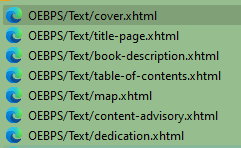 The one benefit of enraging discourse is that it brings my principles into sharp focus so I can move from passive preference to direct action.
That’s not enough to compensate for the collective damage done by so many people loudly and proudly declaring they do not give a shit about harming other human beings and refuse to entertain even the tiniest measure to avoid doing so.
The text is about identifying books some readers may prefer to avoid. The subtext is about people self-identifying as selfish and relishing cruelty.