Remember that patchwork coat it took me 3 years to finish? Approximately 300 million miles of all half double crochet stitches?
Near the end of the interior patch pockets for Millstone Cardigan, I accidentally learned I’ve been doing hdc wrong the entire time I’ve been doing crochet.
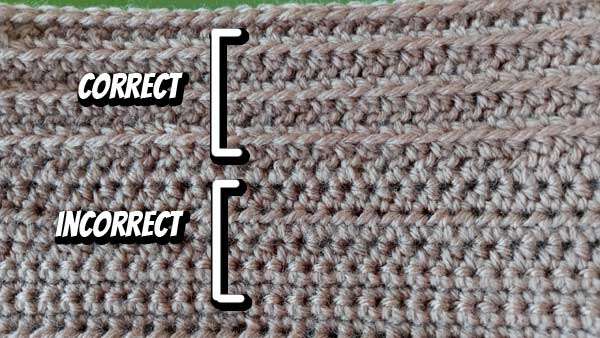
(I guess if you don’t want texture, it’s versatile rather than “incorrect.”)
Unless I’m working in rounds, I always have to tilt the top of my work to bring the loops I’m stitching into up to the top. Hdc has 3 loops that end up front, top, and back, so when I tilt forward out of habit, I’ve been stitching into the second and third loops, which just makes slightly taller single crochets. If, however, you go into the front and top loops, it creates a little rib between rows on the opposite side that almost looks like a surface slip stitch and makes the holes appear smaller.
Why doesn’t it work that way, just on the opposite side, stitching into the other pair of loops? Same explanation for most things in crochet: sorcery.
If you stitch into the first and third loops but not the second, I hear it summons a demon who gives you a drop spindle and seduces you into hand spinning your own yarn.
Recently watched: The Night House, starring Rebecca Hall (whom I actively seek out because she has Competence Vibes that I find soothing). In it, she’s experiencing supernatural phenomena following the recent suicide of her husband.
It had a good start and one flaw running through the middle, and then it went off the rails so I was annoyed for the entirety of the final act. I can pinpoint the moment it lost me:
Made mediocre croissants by following a recipe exactly. Too much flour to begin with and overworked until the butter layers were mashed into the dough. Edible, but basically unnecessarily time-consuming and decorative rolls—which the author’s note at the top of the recipe explicitly promises they will not be. Awkward!
I used the same recipe with modifications to flour (55 g less; approximately ½ cup) and laminating technique and made redemption danish the following day.


These were properly “hold a plate under your chin to catch the flakes.” The cookbook has been modified accordingly.
(Hill I will die on: Cookbooks are workbooks, not sacred texts. Notes add value.)
I used to do recipe testing for cookbooks, and the worst results were always from commercial bakeries trying to convert for home cooks. They have 50 things in their workflow and environment that they take for granted, none of which make it into the recipes and without which it’s impossible to reproduce their results. They wouldn’t be able to reproduce their results in your kitchen with supermarket ingredients, and there ought to be a disclaimer to that effect on the cover of every book to compensate for publishers’ abandonment of QA.
I chanced upon a complaint that accessibility overlays (spot menus that make website visitors with disabilities choose their own accommodation adventure) are detrimental to the people they’re allegedly meant to serve. (I say “allegedly” because many sites that use them are more interested in not getting sued for accessibility violations than in making their sites accessible to as many people as possible.) This overlay fact sheet provides a summary of the drawbacks and a lengthy list of deeper reading at the end.
Since I had already applied to the theme itself some of the features in the basic overlay plugin I was using (e.g., underlined links) and things like text size can be adjusted in users’ browser settings, most of that overlay’s offerings were redundant. That particular plugin had the advantage of not using cookies, but basically all it added was a dark mode, at the expense of getting in the user’s way.
Accordingly, that overlay has been removed.
Dark mode isn’t readable with my astigmatism, but I know light mode is difficult for others for a variety of reasons. This therefore counts as an accessibility issue, not just a cosmetic one, so I wanted to maintain the option to choose. A lot of dark-mode plugins use a non-disable-able cookie to auto-detect OS/browser preference for dark mode.
I’m anti-cookie. Cookies are an invasion of privacy. They also require an obnoxious popup banner for legal compliance, which itself requires a mandatory cookie to store your acceptance/rejection of other cookies, and next thing you know, it’s cookies all the way down.
The dark mode plugin I used previously (DarkMySite) does have the option to disable the OS/browser spying and remain cookie-free, and I was able to use the powers of CSS to fix its problem of stripping the underline from links, an accessibility fail that caused me to drop it before. Accordingly, it has been reinstated. The toggle floats at the bottom right of the screen.
One click/tap to toggle a setting seems preferable to automation that comes with tracker infestation and a popup that has to be dismissed, but I’ll reconsider if I learn this is also hostile design.