One of Ours by Willa Cather won the Pulitzer Prize for fiction in 1923. The Pulitzer Prize is awarded to works of “distinguished fiction by an American author, preferably dealing with American life.” This is one of (at the time of this writing) 10 Pulitzer-winning books that are no longer under copyright and are available free via Project Gutenberg.
I saw a review in which the reader was motivated to read this book because Ernest Hemingway hated it, and I felt kinship because I, also a hater, watched High Noon because John Wayne hated it. (Brilliant movie. Instant place in my Top 10. There’s one scene in particular that sounds like everything is going the hero’s way and then the speaker reveals his wildly different interpretation of the words that just came out of his own mouth, which has become my greatest writing aspiration. I will never get over it. And the “fuck all y’all” gesture at the end—chef’s kiss. If you’ve never liked a Western, try High Noon.)
While this book did not earn a place in my heart, it is leagues ahead of the previous Pulitzer winners by virtue of not being about obnoxious rich people.
Claude’s starting problems are his father, a “you just can’t take a joke” bully who, for example, rather than pick (or have one of the farmhands pick) the cherries his wife couldn’t reach, cut down the cherry tree, and his mother, who insists Claude attend a religious college because the state university (regardless of its superior curriculum) is full of sinners. He’s an average farm boy who’s generally well liked and has reasonable wing-stretching aspirations. I’ve never gotten so far into one of the books in this challenge without despising the main character.
Daddy, on a whim, acquired a cattle ranch in Colorado and is sending Younger Brother off to run it. While Daddy and YB are off setting up that enterprise, Claude has to drop out of college and run the old farm. Claude was not consulted about this at any point; the announcement was sprung on him at the end of his summer break. That “you just can’t take a joke” paternal charm strikes again!
World War I has begun in a far-off land. In rural Nebraska, the war is mostly gossip and crop speculation.
Claude proposes to childhood friend Enid, whose goal in life is to be a missionary in China, like her older sister. Claude is sure marriage will settle Enid into her natural place as a woman. Enid is persuaded by a pastor that the greatest thing a woman can do for the church is convert her atheist husband, so she grudgingly accepts Claude’s proposal. This is going to go great!
The wedding happens, but not the wedding night. Enid is sex-repulsed (at least with Claude). A year or two later, Claude is kinda miserable. (Who could have foreseen?) Enid’s sister (the missionary in China) falls ill, and Enid goes abroad to take care of her. She leaves Claude instructions for caring for her precious chickens, and he promptly sells them. He’s not going to miss Enid, but he’s embarrassed that everybody knows his wife basically left him and must think he’s a loser.
He never thinks about Enid again. No nostalgia for their childhood friendship. No regret that marriage wasn’t what either of them expected. No wondering if she’s okay in China or if she ever thinks about him or if she has regrets. Just *poof!* like she never existed. (To be fair, my ADHD’s “out of sight, out of mind” tendency causes me to forget people exist in much the same way, but I’d also be the first person to say I’d be a shitty main character because of it.)
I stopped finding Claude inoffensive about the time his thoughts turned toward domesticating poor Enid (and I began to understand why she pronounces his name “Clod”), but Cather does a great job conveying authentic bafflement and frustration that his life has become chronic dissatisfaction. He’s done everything he was asked and everything he was “supposed to,” yet he’s unhappy—a sentiment I’ve only ever heard in real life from women who feel trapped in their role. (According to Wikipedia, Cather’s work is known for remarking on “the speciousness of rigid gender roles,” and I may have to read more from her. I may also need to read a biography because “Edith was buried beside Cather 25 years later because they were such GOOD FRIENDS” isn’t even the queerest thing on her page.)
Claude decides the solution to his malaise is to voluntarily enlist and go fight Germans, as one does.
During the journey across the Atlantic, an influenza outbreak tears through the ship, killing many men, including most of Claude’s new friends. Claude remains healthy and becomes the doctor’s helper.
Victor, a slick dude from (I think) Iowa, enlisted in Canada and ended up in the British army somehow. He seems very cosmopolitan to wholesome farmboy Claude. Victor sends Claude to ask for medication (unspecified in the text), which causes the doctor to snap he doesn’t have any of that and besides, it’s palliative, not a treatment. My note was “syphyllis?”, given this guy’s self-reported adventures.
Incidentally, I love the real-life public safety posters insisting that all these men spending all their time together were acquiring VD from loose women while on leave and not passing it amongst themselves via “stress relief activities” in the field after being bombarded by incessant messaging that women will give them diseases. Bros before skull-faced hoes!
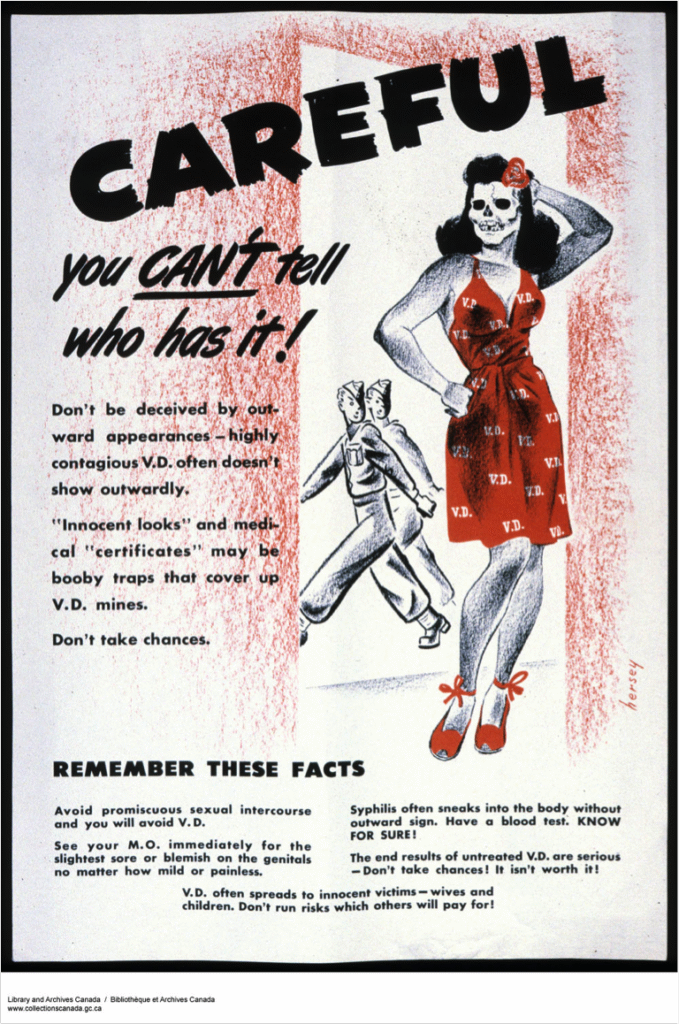
Claude finally reaches France, where a whole lot of nothing happens. Claude is Special Boy who never gets sick, never gets injured, never makes an enemy. He learns Victor Suave got shot down and reacts by… getting bummed he’ll never get the promised guided tour of London. He seems rather like a tourist in war-torn Europe. Perhaps this is how high-ranking officers experience war, but Claude is supposed to be in the trenches (or at least traveling toward them). He seems to feel a greater sense of purpose than he ever has before, but that doesn’t manifest in doing anything.
He finally gets sent to the front-front line and dies within a day. The end, except for an epilogue in which his mother thinks it was probably for the best because so many men come home from the war and commit suicide. I know we all rationalize our grief in different ways, but holy shit, Mom.
There were some lovely turns of phrase and well-conveyed emotions, so I’m convinced Cather can write something I’d like more. This appears to be one of her least-regarded books, regardless of its Pulitzer status. I’ll try fan fave My Antonia when my classic-lit obligations are out of the way to see if that one works better for me.