The Best Time to Wear a Striped Sweater Is All the Time is coming along, slowly but surely. I have committed to the location of pocket holes.
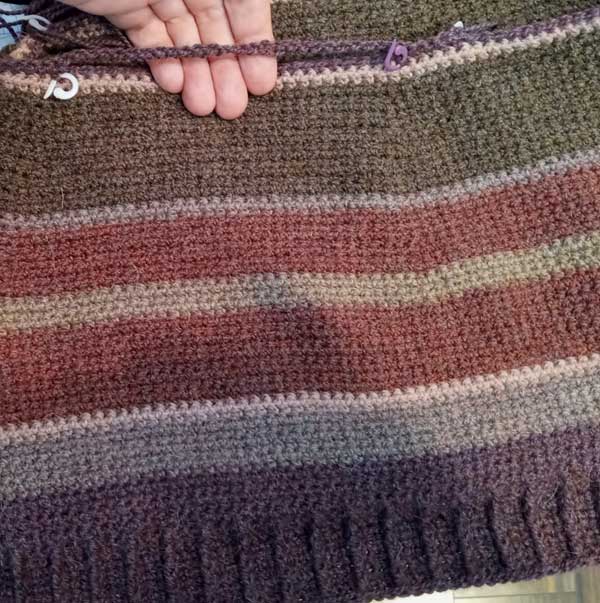
(The first sweater I made had no pockets, and every time I wear it, I regret this oversight. Never again!)
I’ve resolved to crochet some every day. If I do 10 stitches while waiting for my computer to boot, I’m allowed to check it off the to-do list. This will hopefully get me out of neglecting a project for months because I don’t have time to sit down and churn out enough rows to look “productive.”
Possibly because words are such a source of stress at the moment, I’ve been fixating on visual art forms. I set myself a daily Small Draw challenge—as in, it takes a really long time to draw a full-page image versus a couple of minutes to sketch on a postage stamp, so think small.
My biggest problem with drawing has always been that my imagination isn’t visual (I think in concepts made of words), so there’s no image-thought to transfer from my head to paper and no strong drive to translate words into a picture. What-to-draw inspiration so far has come from E.G. Lutz’s aptly titled What to Draw and How to Draw It; Line & Form by Walter Crane; and Alphonso Dunn on YouTube.
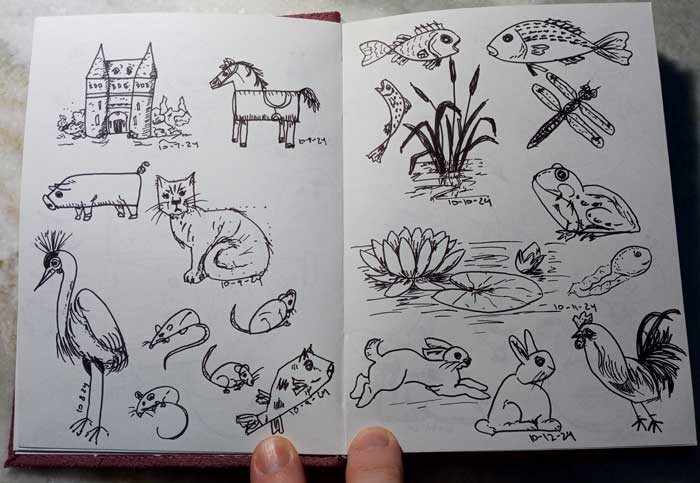
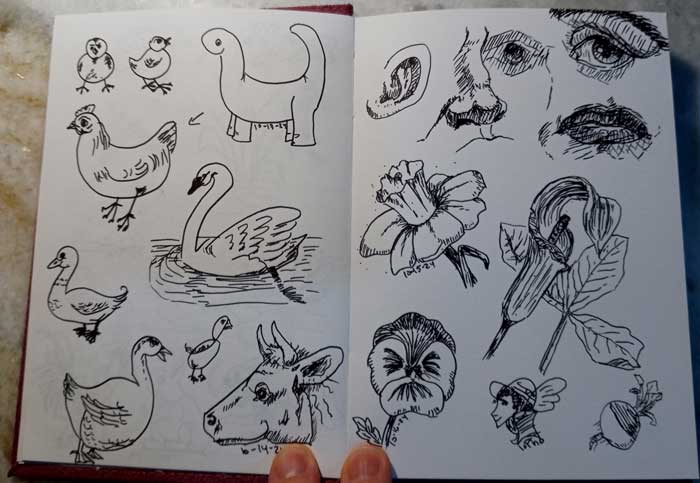
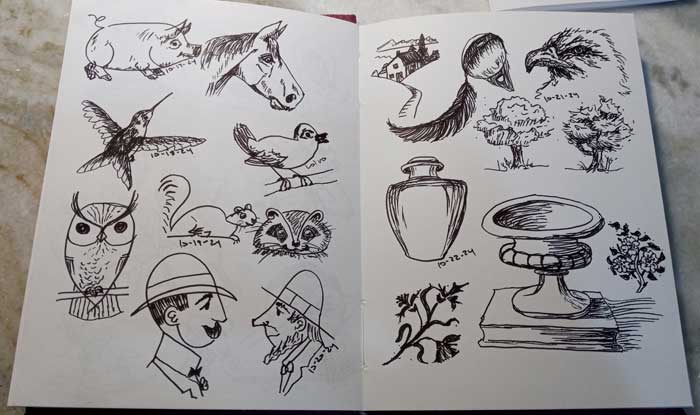
I’ve noticed a strong preference for botanicals. Wilt, weather, and wildlife can be blamed for wonkiness in a plant and it will still be recognizable, but if you put an eye slightly askew on anything with a face, congratulations, it’s a monstrosity.
Preliminary pencil sketches and a finer pen would solve some problems, but then we’d be getting into “trying to be good at this” rather than “fun, 5-minute brain exercise that can fill a lull,” and then I’d feel bad and quit. I have enough things in my life conspiring to make me miserable; I don’t need to volunteer for another.
The opportunity to take a free ASL course from the Oklahoma School for the Deaf appeared before me, so I added that to my brain-rot-prevention efforts. I’m supplementing with YouTube because I need more explanation (e.g., “the same sign can mean multiple things, depending on context, repetition, and facial expression” vs. leaving me wondering if I’ve been wrong about a sign I thought I learned weeks ago). I like Bill Vicars for the conversational aspect, but I’m pretty sure I wouldn’t be able to follow those videos at all if I’d gone in without some foundation.
(I’m 950 days into Duolingo Spanish and couldn’t carry on a conversation with a small child, so I know better than to think I’ll become proficient in ASL. This is more an “always be learning” endeavor than an “acquire a useful skill” one.)
The only bake of note was conchas.
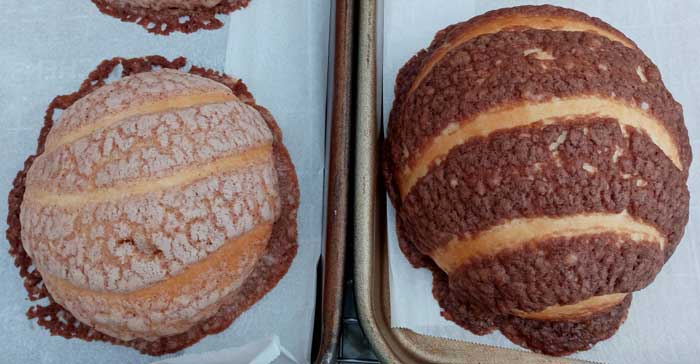
Cinnamon on the left; chocolate on the right. Size disparity because the “halves” into which I divided the dough for the two flavors were, uh, approximate. None of the recipes I looked at specified to what diameter the cookie “shells” should be rolled; I overdid it, so they were very thin and melted off the sides of the bread rather than remaining thick toppers. Still a nice bit of flavor and texture, but I’ll have to try again with wisdom gained.